I
Precipitate
Time crystallises into the present, melts down the body, and spills off the edge into the dark — drop by drop.
Enter →We are made of what we remember, and we remember almost nothing.
Six real-time works on the fragility of memory — individual, and collective
The argument
A life keeps a handful of moments and lets the rest run off. A community keeps less — only the history it chooses to preserve, set down, repeated until it hardens into fact. Each of these six pieces runs a real process — crystallisation, erosion, copying, fire — and the process is the argument. What survives is not what mattered. It is what was kept.
The colours mean something
Two pairs are deliberate. The brass gold is counterfeit and the white-gold is true — false warmth is the loud, saturated one; true warmth is barely-coloured light. And the two blues: the honest individual is silver; the law is indigo.
Six works · in the order to meet them
Time crystallises into the present, melts down the body, and spills off the edge into the dark — drop by drop.
Enter →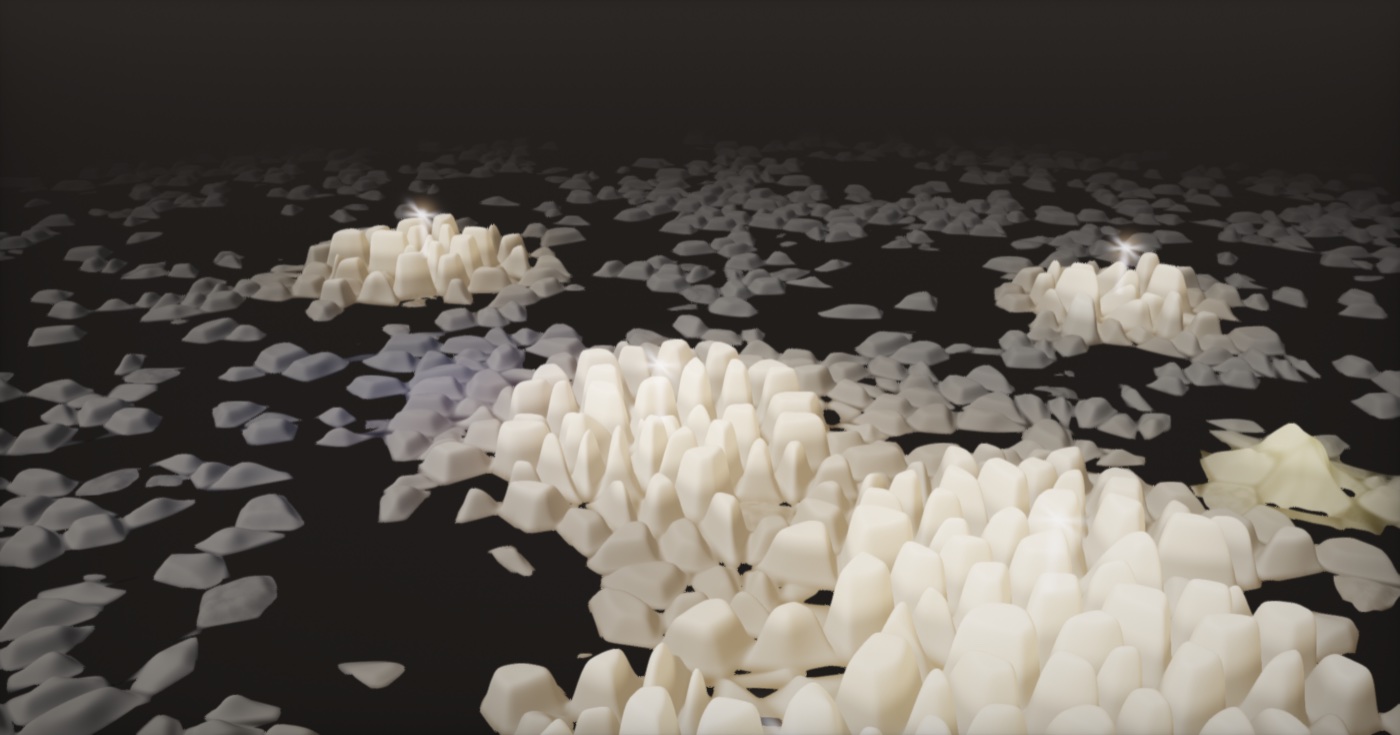
Collective memory as a commons: held up only where it is tended, crumbling to dust everywhere unattended.
Enter →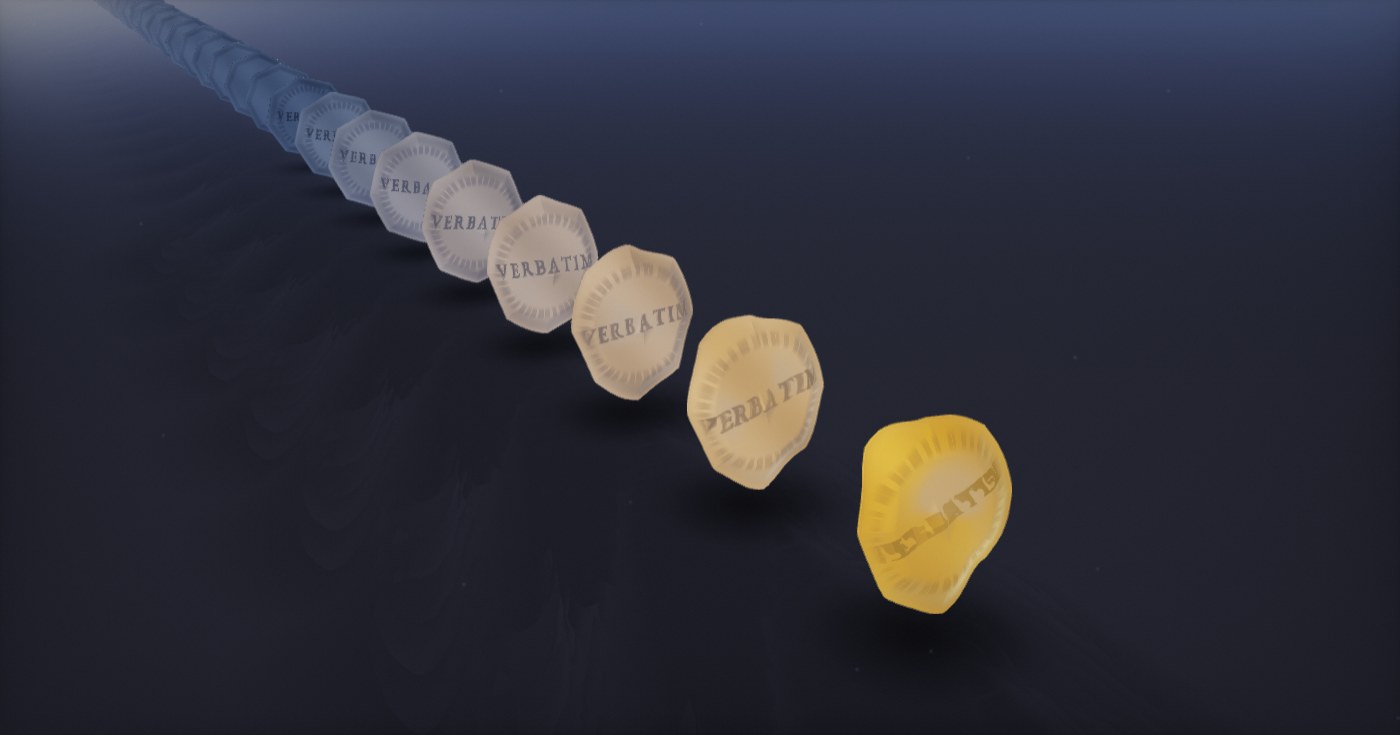
A memory copied hand to hand until it is everyone's and no one's — and not quite what it was.
Enter →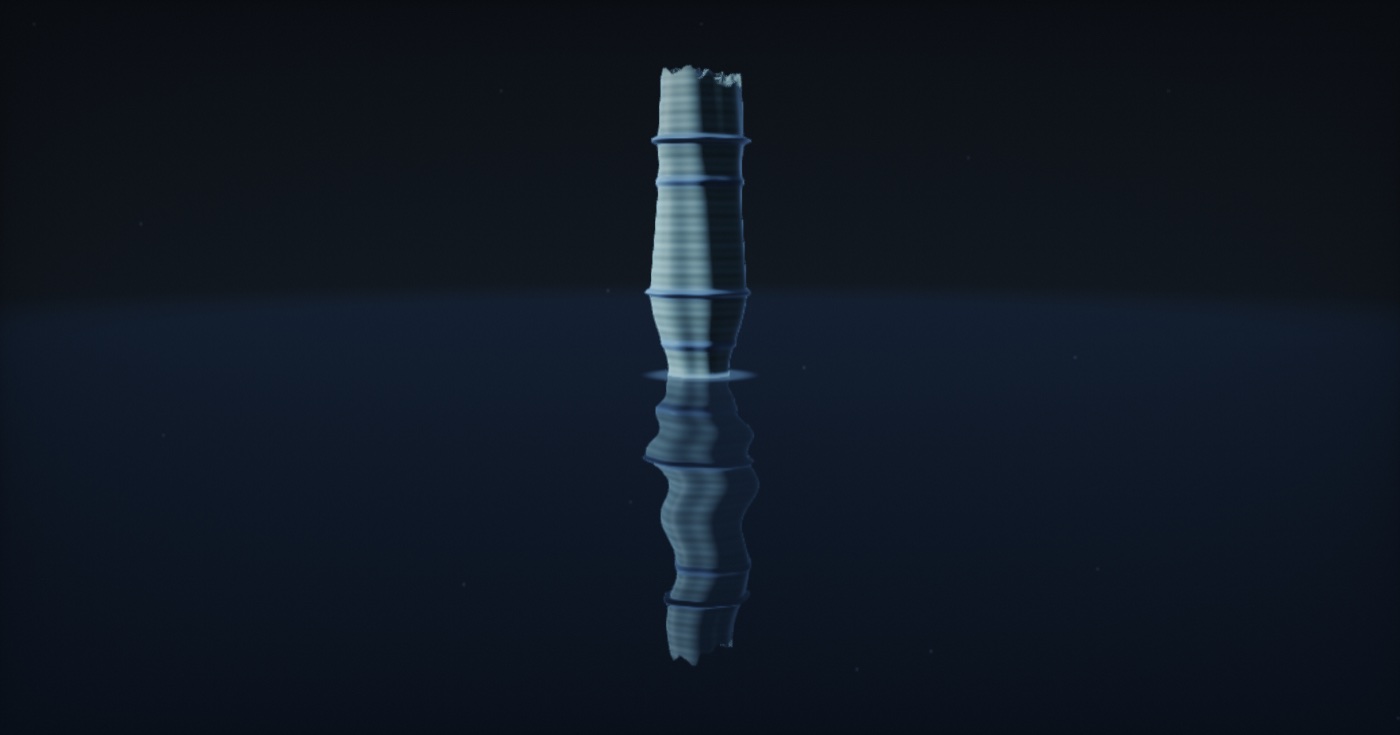
A record laid down grain by grain, and a tide that takes it back. What survives is not what mattered; it is what the water spared.
Enter →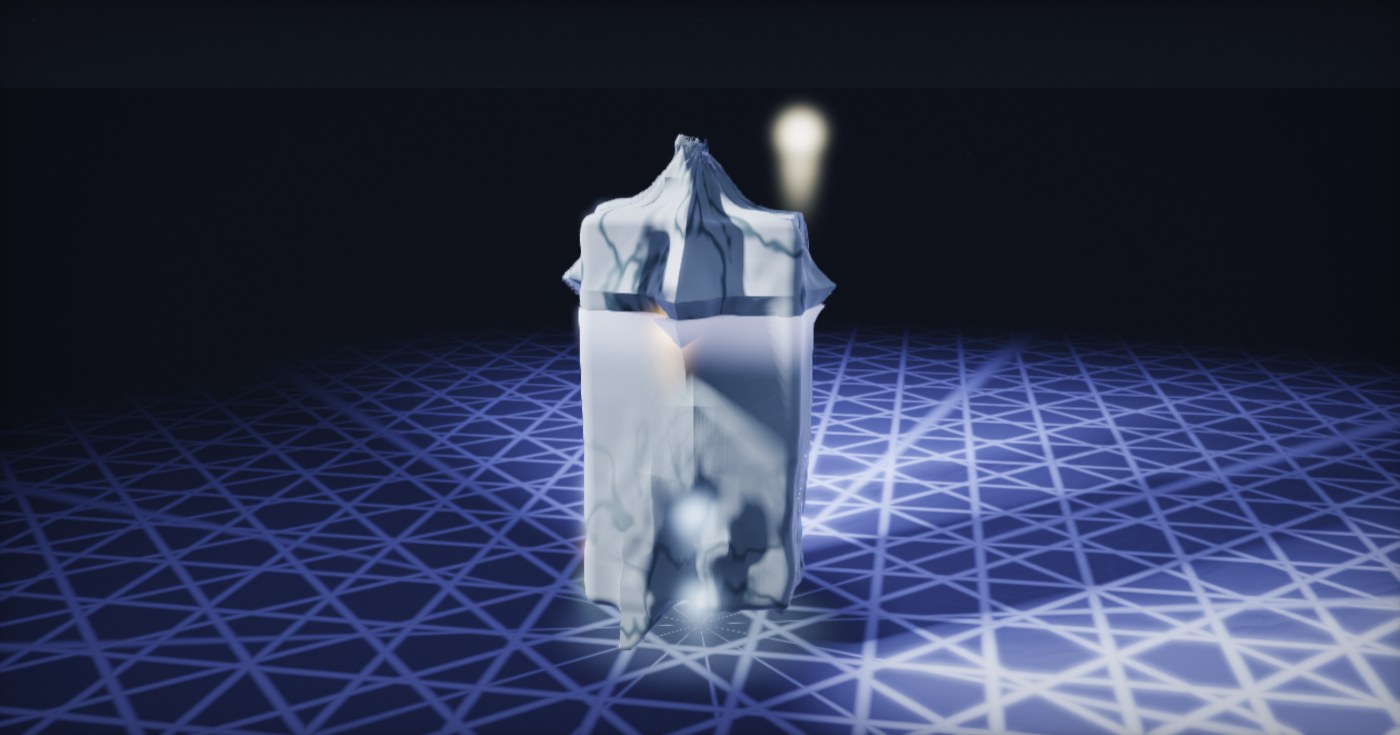
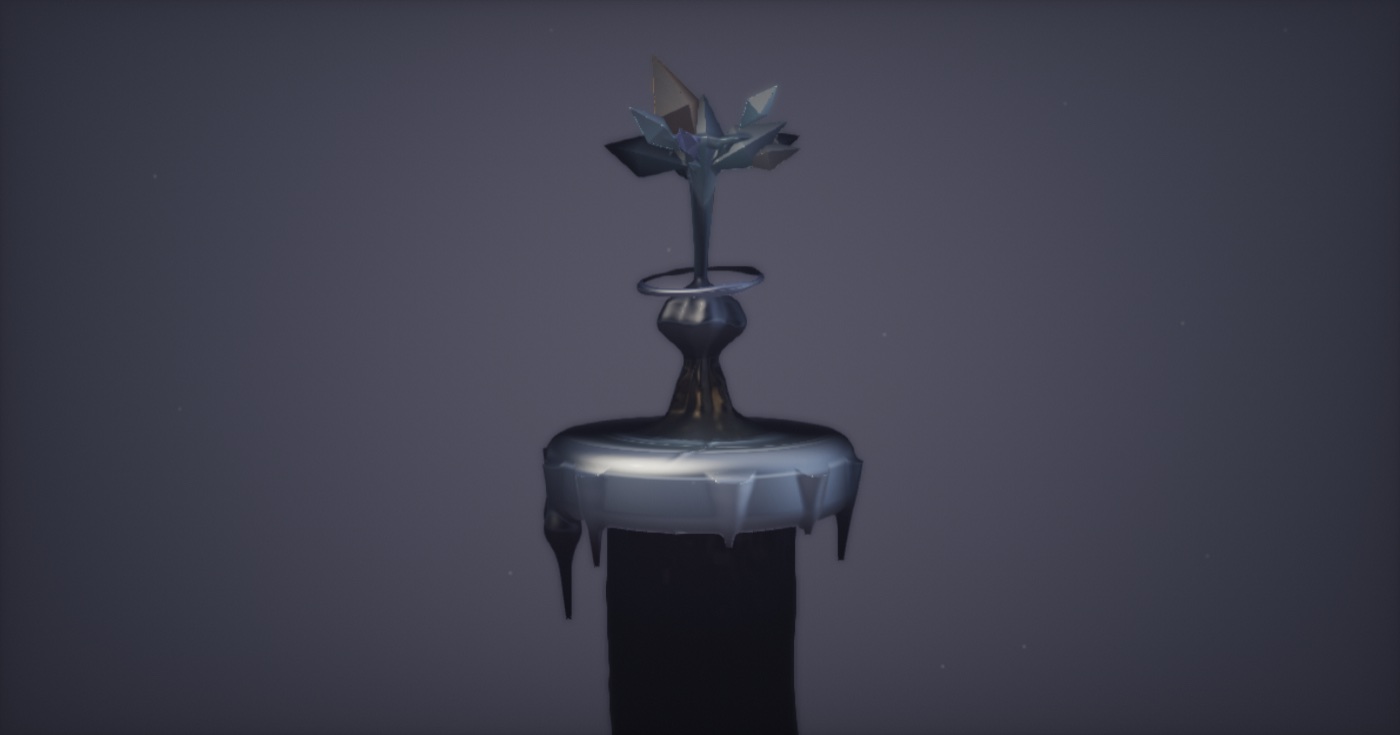
Memory hardened into law — frozen so completely it has become a monument, and cracking under everything it will not let go.
Enter →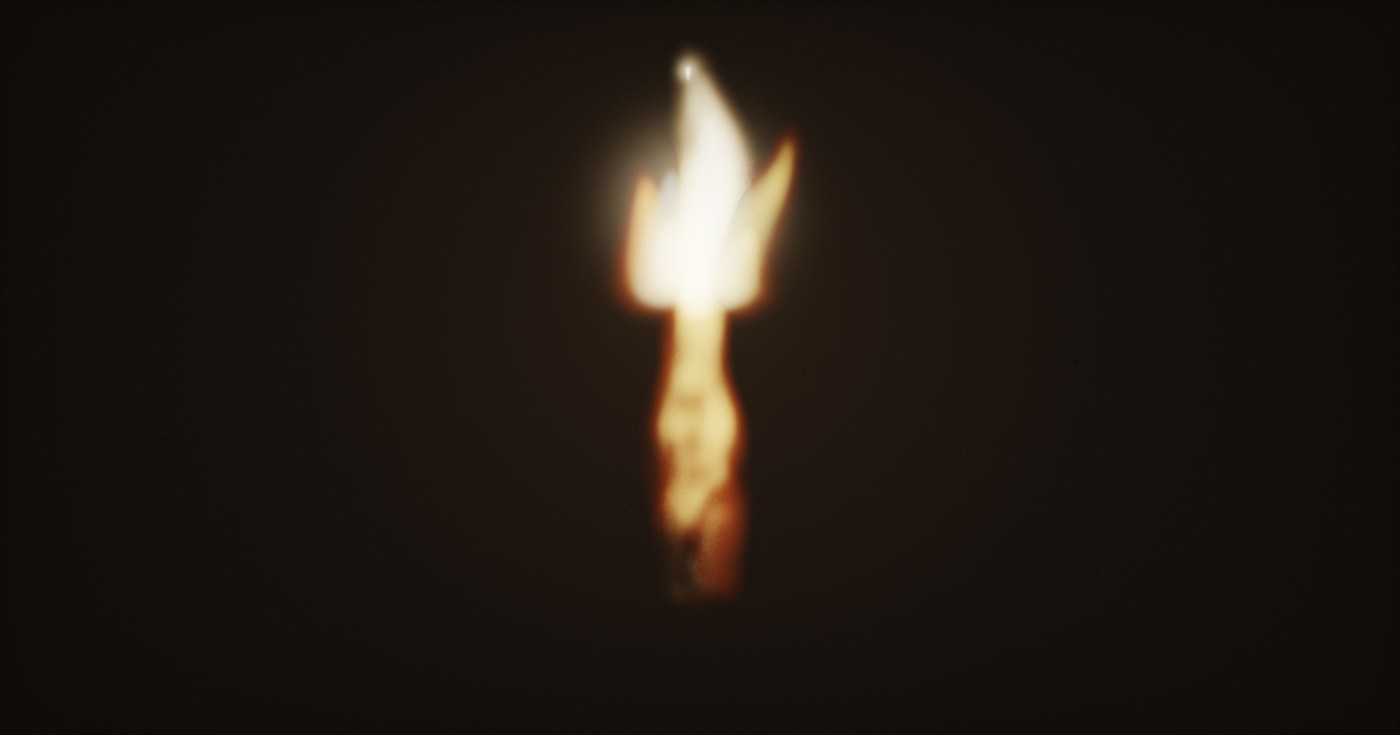
A living flame, wholly on fire yet not consumed — the one self the dark can no longer take back. Where the series resolves.
Enter →What remains
The series runs from the single mind to the commons and back — memory melting, crumbling, drifting, eroding, hardening. Two pieces are its poles: Doctrine, set so hard it cannot change, and Tideline, given so wholly to flow it cannot hold — the two ways a record dies. Between them the series keeps a living third, and saves it for the end.